Welcome to my blog

Photographie animalière au Québec : ce que des années sur le terrain m’ont appris
Après des années à photographier la faune du Québec, j’ai compris qu’une image forte ne repose pas uniquement sur la technique. Du Nunavik aux forêts québécoises, je partage ma vision de la photographie animalière, de l’éthique, de la patience et de l’importance de l’histoire derrière chaque image.
Learn more
How to Become a Wildlife Photographer: A Complete Guide to Breaking into Wildlife Photography
This exciting profession goes far beyond simply taking pictures: the wildlife photographer prepares their outings, scouts locations, develops and selects their images, handles communication, and manages all administrative tasks. They immerse themselves in nature to capture wildlife without disturbing it, choosing suitable locations and blending into the landscape. To excel, one needs a solid knowledge of species, patience, observation, and mastery of photographic techniques. This excerpt introduces the challenges and skills required to succeed in wildlife photography while respecting biodiversity.
Learn more
Wildlife photographer in Quebec: Jean-Simon Bégin's passion for wild animals
Wildlife Photographer in Quebec: Jean-Simon Bégin's Passion for Wild Animals When Nature Becomes a Vocation Becoming a wildlife photographer is not just about technique or camera equipment. It is, first and foremost, a deep passion for nature, a commitment to observing, understanding, and respecting wild animals in their environment. In Quebec, few photographers manage to make wildlife photography a full-time profession. This field requires as much perseverance as it does talent. Among these rare artists is Jean-Simon Bégin, who dedicates his life to capturing the raw beauty of wildlife and Nordic landscapes. For over 25 years, he has roamed the wild territories of Quebec to photograph animals in their natural habitat. His objective is simple but powerful: to bring nature into people's homes and remind them of the beauty of the wild world. Wildlife Photography: More Than Just an Image For many, wildlife photography simply means taking a picture of an animal. In reality, it is an extremely demanding discipline. A wildlife photographer often needs to: spend hours or days waiting understand the behavior of species face difficult weather conditions travel through isolated territories In the boreal forests, on the shores of a frozen lake, or in the Nordic plains, every encounter with an animal is unpredictable. It is precisely this uncertainty that makes wildlife photography so captivating. Exploring Wild Quebec Quebec's territory is one of the richest environments in North America for wildlife. It is home to, among others: moose gray wolves red foxes caribou black bears snowy owls many species of birds and mammals Photographing these animals requires a deep knowledge of their habitat. Over the years, Jean-Simon Bégin has explored a wide variety of regions: boreal forests northern tundra Quebec rivers and lakes isolated landscapes of Nunavik These territories offer spectacular natural scenes that then become powerful images. The Art of Capturing the Wild Moment Good wildlife photography does not depend solely on the presence of an animal. It relies on several essential elements: LightNatural light completely transforms a scene. The first and last hours of the day are often the most spectacular. Animal behaviorAn interaction, a gaze, or a movement can tell a story. Natural contextThe environment in which the animal is found is as important as the animal itself. Wildlife photography is therefore about capturing a rare and authentic moment. A Career Built on Passion and Entrepreneurship Earning a living from wildlife photography represents a significant challenge. The market is limited and competition is strong. In Quebec, only a few photographers succeed in making it their main profession. To achieve this, one must not only master the art of photography but also develop a real business. This involves: selling photographic works creating derivative products managing an online store developing a community on social media This approach allows for transforming a passion for nature into a sustainable project. A Community of Nature Enthusiasts Over the years, Jean-Simon Bégin's work has gathered an impressive community. His Facebook page now has over 190,000 people who follow his adventures and images of wild animals. This community shares a common interest: the beauty of nature and the fascination with wild animals. Each new image becomes an invitation to discover a moment captured in Quebec territory. Images That Become Works of Art Wildlife photographs do not just stay on a screen. They also take various forms: fine art prints wall canvases photo books calendars puzzles and illustrated objects These works allow nature lovers to integrate a piece of the wild territory into their homes. The goal remains the same: to bring people closer to nature. Recognition in the World of Photography Jean-Simon Bégin's work has also received several accolades in the photography community. Notably, he won first place in the Terrestrial Fauna category of the Canadian Wildlife Photographer of the Year 2025 competition, a significant distinction in the field of nature photography. This type of recognition confirms the artistic and technical quality of his work. Why Wildlife Photography is So Fascinating Wildlife photography touches something deeply human. It reminds us that: we are part of a larger ecosystem nature still has preserved territories encounters with animals remain rare moments A successful wildlife photograph doesn't just show an animal. It conveys an emotion, a story, and a moment of authentic nature. Bringing Nature Into Your Daily Life Through his images, Jean-Simon Bégin invites people to slow down and observe nature differently. His photographs allow us to discover: the power of a wolf in the forest the delicacy of a bird in the snow the majestic presence of a moose in a boreal landscape These scenes captured in the wild territories of Quebec become open windows to the natural world. Discover Jean-Simon Bégin's Photographic World If you enjoy wildlife photography, northern landscapes, and the wildlife of Quebec, you can explore Jean-Simon Bégin's complete world on his official website: https://jeansimonbegin.com You will find there: a vast catalog of wildlife photographs artistic works nature-inspired products images captured in some of Quebec's wildest places Each image tells of an encounter with nature.
Learn more
Create a nature-inspired ambiance at home with photo art and accessories
Create a nature-inspired ambiance at home with photo art and accessories Nature has a calming power. Landscapes, wild animals, and scenes captured in the great outdoors evoke tranquility, contemplation, and a sense of freedom. Integrating these elements into your decor is an excellent way to transform your home into a more serene and inspiring place. Today, many people seek to create a nature-inspired interior. Whether in an urban apartment, a house, or a cottage, a few well-chosen decorative elements can completely change a room's atmosphere. Photographic art and wildlife-inspired accessories can create a warm, natural ambiance while highlighting the beauty of Quebec's landscapes. The Importance of Art in Interior Design Wall art often plays a central role in a space's ambiance. A powerful image immediately catches the eye and becomes a focal point in the room. When it comes to nature or wildlife photographs, the effect is even more potent. These images bring a sense of spaciousness and tranquility. A well-chosen photograph can: create a soothing atmosphere give character to a room recall a particular place or moment express your passion for nature Photographic art thus allows you to bring the outdoors indoors. Prints and Canvases: The Foundation of Nature Decor To create a nature-inspired ambiance, photographic prints and canvas wall art are often the starting point. Prints on fine art paper offer great detail and rich colors that highlight landscapes and animals. Ready-to-hang canvases, on the other hand, provide a strong visual presence and easily fit into a living room, bedroom, or office. A wildlife scene or a wild landscape can instantly transform a blank wall into a true gallery. Popular subjects include: moose wolves nordic birds boreal landscapes winter nature scenes These images evoke the beauty of wild territories and create an inspiring atmosphere. Add Comfort with Textile Accessories Decoration is not limited to walls. Decorative textiles also play an important role in a room's ambiance. An illustrated fleece blanket can provide both warmth and style. Placed on a sofa or at the foot of a bed, it adds a touch of comfort while incorporating a nature-inspired visual element. Illustrated microfiber towels can also serve as decorative accessories when used in: a bathroom a home spa a cottage a pool area Their colorful design adds life to the space. Practical Objects That Become Decorative Several everyday objects can also contribute to the decor when well-chosen. For example: artistic calendars hung in an office illustrated card decks placed on a coffee table notebooks or journals arranged on a shelf These practical objects then become decorative elements that reflect your world and your passions. In a nature-inspired decor, every detail can contribute to creating a coherent atmosphere. Decoration Inspired by Quebec's Landscapes The landscapes and wildlife of Quebec offer exceptional visual richness. Integrating photographs captured in these territories creates a direct link with local nature. Whether it's a calm lake, a boreal forest, or a wild animal in its habitat, these images tell a story. In a living room, office, or cottage, these artworks often become central pieces that attract attention and spark conversation. Creating a Warm and Authentic Ambiance Successful decoration often relies on a balance between several elements: wall art comfortable textiles decorative objects By combining these elements, you can create an environment that reflects your personality and your love for nature. A decor inspired by wildlife and landscapes provides an atmosphere that is both calm, warm, and authentic. Finding Inspiration in Photographic Art Photographic works capture rare moments in nature. Each image often represents hours of observation and exploration in the field. These images then become decorative pieces that bring a bit of these landscapes into your daily life. Whether it's an animal observed in its habitat or a spectacular landscape, photographic art allows us to reconnect with the beauty of the natural world. Discover Works and Accessories If you wish to create a nature ambiance in your home, you can explore the different collections available. There you will find photographic prints, wall canvases, and several accessories inspired by the wildlife and landscapes of Quebec. 👉 https://jeansimonbegin.com/pages/boutique Transform Your Home into a Natural Refuge Home is where we recharge. By integrating works and objects inspired by nature, you can transform your space into a true visual refuge. Images of wildlife and landscapes recall the beauty of the territory and bring a sense of calm to daily life. With a few well-chosen elements, your interior can reflect your connection with the great outdoors and the wild nature of Quebec.
Learn more
Nature-themed gift ideas for the holidays and birthdays
Nature-Inspired Gift Ideas for Holidays and Birthdays Finding a unique gift for a nature lover can sometimes seem difficult. However, products inspired by wildlife and landscapes offer an excellent solution. They often combine utility, aesthetics, and emotion, making them cherished presents for many occasions. Whether for a birthday, the holiday season, or simply to bring joy, nature-themed gifts have a special charm. They evoke open spaces, encounters with wild animals, and the landscapes that surround us. Here are some nature-inspired gift ideas that can appeal to both outdoor enthusiasts and art lovers. Give a High-End Puzzle A quality puzzle is both a relaxing and stimulating gift. Puzzles allow you to slow down, focus, and enjoy a quiet moment away from screens. When illustrated with images of nature or wildlife, they become even more immersive. A 1000-piece puzzle often strikes the perfect balance between challenge and pleasure. Once completed, many enthusiasts even choose to frame it as wall art. It's an ideal gift for: puzzle enthusiasts nature lovers people who enjoy relaxing activities An Artistic Calendar for the Whole Year A nature-illustrated calendar is a gift that lasts all year. Each month reveals a new image, often captured in a different landscape or highlighting a unique animal species. Artistic calendars are perfect for: an office a cabin a kitchen a workshop They add an inspiring visual touch to daily life. Wildlife-Illustrated Greeting Cards Nature greeting cards are simple but highly appreciated gifts. A set of cards ensures you always have an elegant way to send a personalized message for different occasions: birthdays thank yous celebrations holidays Illustrated with wildlife or landscape photographs, these cards also become small artistic objects that many people choose to keep. A Duo of Card Games for the Family Illustrated card games are a unique and accessible gift idea. They allow for shared moments with friends or family while discovering nature-inspired images. A duo of card games is particularly interesting because it allows: to have two games for different places to offer a complete gift to enjoy excellent value for money It's a perfect gift for evenings at the cabin or family gatherings. A Soft and Decorative Fleece Blanket Nature-illustrated fleece blankets are both comfortable and decorative. They can be used: in the living room in a bedroom at the cabin on cool evenings on the terrace With a photograph of a landscape or wild animal, a blanket also becomes a decorative element that recalls the beauty of nature. A Microfiber Towel for Outdoor Activities A microfiber towel is a practical gift that can be used all year round. Thanks to its quick drying and lightness, it is ideal for: the beach the pool camping kayaking travel When illustrated with an image of wildlife or landscape, it also becomes a visually unique accessory. Nature Stickers to Personalize Your Belongings Nature-inspired stickers are a small gift idea that is very popular. They make it easy to personalize: a water bottle a laptop a notebook a suitcase a case Stickers illustrated with animals or landscapes are particularly popular with nature and outdoor enthusiasts. Create a Personalized Nature Gift Box One of the best ways to give a unique gift is to combine several products. For example: a puzzle and a card game a calendar and a greeting card a blanket and a sticker set By gathering a few items, it is possible to create a unique and personalized gift box. This type of gift shows special attention and offers several different experiences to the recipient. Sustainable Gifts Inspired by Nature Products inspired by wildlife and landscapes often have a more sustainable dimension. They celebrate nature, encourage contemplation, and remind us of the importance of the wild territories that surround us. Choosing a nature-inspired gift is also offering an object that evokes adventure, open spaces, and encounters with wildlife. Discover All Collections If you are looking for an original nature gift, you can explore all products directly on the online store. You will find puzzles, calendars, greeting cards, card games, blankets, towels, and stickers illustrated with photographs captured in the wild landscapes of Quebec. 👉 https://jeansimonbegin.com/pages/boutique Give the Gift of Nature A good gift is not just useful. It tells a story. Nature-inspired products allow you to offer an object that evokes the beauty of landscapes, the presence of wild animals, and moments spent exploring the wilderness. Whether for a birthday or the holiday season, a nature gift always leaves a lasting impression.
Learn more
The Art of the Beach Towel: Combining Comfort and Nature Photography
The art of the beach towel: combining comfort and nature photography When we think of a beach towel, we often imagine a simple accessory to dry ourselves after a swim. However, a good towel can completely transform the experience of a day by the water. Today, modern microfiber beach towels combine performance, comfort, and design. They are no longer just for drying, but also become an aesthetic object that people love to take with them to the beach, lake, or pool. Some towels go even further by incorporating an artistic aspect. This is particularly true for towels illustrated with nature and wildlife photographs, which transform a simple accessory into a unique visual piece. Why choose a microfiber towel Microfiber towels have gained enormous popularity in recent years. Unlike traditional cotton towels, they offer several significant advantages. A microfiber beach towel is generally: lighter more compact faster drying more odor resistant These characteristics make it an ideal choice for outdoor activities such as: the beach kayaking camping the pool travel Microfiber effectively absorbs water while remaining easy to transport. Fast drying that changes everything One of the main advantages of microfiber towels is their quick-drying ability. Unlike cotton, which can remain damp for a long time, microfiber wicks away moisture much faster. This allows for: using the towel multiple times in the same day avoiding damp odors reducing drying time after use For days at the beach or by a lake, this feature is particularly appreciated. A towel that resists sand Anyone who spends time at the beach knows this problem: sand that sticks everywhere. Some traditional towels retain grains of sand in the fabric fibers. With microfiber, the situation is different. The texture of microfiber prevents sand from easily getting embedded. Often, just shaking the towel will make the sand fall off. This makes microfiber beach towels much more practical for activities by the water. When a towel becomes a visual work of art Beyond performance, aesthetic appeal has become an important criterion. Many people today are looking for products that combine functionality and design. A towel can thus become a unique visual object. Towels illustrated with nature and animal photographs bring an artistic dimension that distinguishes them from traditional models. Each image tells a story and evokes a moment captured in nature. Designs inspired by Quebec wildlife Towels created by Jean-Simon Bégin showcase some of the iconic species of Nordic wildlife. Each model features an original photograph captured in the field during expeditions in Quebec's nature. Among the available models, you can find: Moose Wolves Rainbow Owl The rich colors and natural textures give each towel a strong visual presence. Whether on a beach, by a lake, or around a pool, these images immediately catch the eye. A towel designed to last Beyond design, towels must also be durable. Quality microfiber towels generally offer: good wash resistance color stability a lightweight but robust structure This allows the towel to be used for several seasons without loss of quality. A versatile towel A microfiber beach towel is not just for swimming. It can also be used as: travel towel light picnic blanket sports towel camping or hiking towel Its lightness and quick-drying ability make it particularly versatile. Jean-Simon Bégin's microfiber towels The towels offered by Jean-Simon Bégin have been designed to combine technical performance and nature photography. Each towel showcases a striking image captured from Quebec's wildlife and landscapes. Main features: Quick-drying microfiberAbsorbs water efficiently and dries quickly after use. Sand resistantThe texture prevents sand from sticking, making them ideal for the beach. Nature-inspired designEach towel is illustrated with an original animal or landscape photograph. Lightweight and easy to carryPerfect for outdoor activities and travel. Discover the complete collection If you are looking for a beach towel that combines comfort, performance, and nature photography, you can discover all available models directly in the store. You will find the Moose, Wolves, Rainbow, and Owl models, each illustrated with a unique photograph. 👉 https://jeansimonbegin.com/products/serviette-microfibre A practical accessory that celebrates nature The objects we use daily can also reflect what inspires us. A towel illustrated with wild animals allows you to bring a bit of nature with you, whether at the beach, lake, or while traveling. And when this image comes from a photograph captured in the landscapes of Quebec, the object takes on even more meaning.
Learn more
Greeting Cards: Why choose a premium card?
Greeting Cards: Why Choose a Premium Card? In the age of instant messages, sending a paper greeting card has become a rare gesture. A text message or email can convey words, but a physical card conveys intent. It takes time to write, choose, and keep. Premium greeting cards go even further. They transform a simple message into a tangible object that can be kept, displayed, or treasured as a souvenir. Here's why choosing a high-quality greeting card makes all the difference. A simple gesture with much greater impact Receiving a card in the mail creates a special moment. Unlike digital communications, a card can be touched, looked at, and reread. It often becomes a small sentimental object that is kept on a desk, a fridge, or in a keepsake box. It's also a way to slow down and take the time to write a few sincere words. In a world where everything is fast and digital, a paper greeting card has a much stronger emotional value. The importance of print quality Not all cards are created equal. Cheap cards often use thin paper and dull prints. A premium card, on the other hand, stands out for: thick cardstock rich and detailed printing a durable finish that protects the image 300 g paper offers a solid feel in hand and enhances the quality of the printed image. The laminated finish also protects the card's surface and helps maintain vibrant colors for years. Authentic photography rather than a generic image Another element that distinguishes a premium card is the origin of the image. Many commercial cards use generic images or stock photos. Cards illustrated with original photographs have much stronger authenticity. Each card then becomes a small visual work of art. In the case of cards illustrated by Jean-Simon Bégin, each image comes from an original photograph captured in the field during expeditions through Quebec's wild landscapes. Quebec's winter wildlife offers unique scenes: red foxes in the snow nordic birds bright winter landscapes wild animals captured in their natural environment These images bring an artistic dimension that transforms the card into a true visual object. An elegant and versatile format The 5 × 7 inch format has become a standard for quality greeting cards. This format offers several advantages: large enough to highlight the image easy to frame or display practical for writing a personal message The blank interior leaves plenty of space to write a sincere and personalized message. Unlike pre-printed cards with generic texts, this allows for the creation of a truly unique message. A card for all occasions Illustrated nature and wildlife greeting cards are suitable for a wide variety of occasions: birthdays thank yous holidays congratulations personal messages Their timeless aesthetic allows them to be used in many situations without being limited to a specific theme. It's also an excellent option to accompany a gift or an online ordered product. Cards that are kept A premium card is not easily discarded. The quality of the paper, the beauty of the image, and the attention to design mean that many people choose to: keep the card display it on a wall frame it keep it as a souvenir It then becomes a small artistic object that transcends time. Jean-Simon Bégin's greeting cards The greeting cards created by Jean-Simon Bégin showcase the wildlife and landscapes of Quebec in all their winter beauty. Each card is designed to offer superior print quality and a strong visual experience. Card features: Authentic PhotographyEach image comes from an original photograph of Quebec wildlife captured in the field. Elegant FormatCards in 5 × 7 inch format, ideal for highlighting the image. 300 g CardstockThick, durable paper that provides a quality feel in hand. Laminated FinishProtects the image and ensures rich, long-lasting colors. Envelope IncludedEach card comes with a white envelope. Blank InteriorAllows for writing a personal message for all occasions. Discover the complete collection Whether to send a thoughtful note or to accompany a gift, a premium greeting card always adds a special touch. You can discover all available models and choose your favorite designs directly on the online store: 👉 https://jeansimonbegin.com/collections/cartes-de-souhaits Why paper cards remain timeless Even in a digital world, some traditions remain valuable. Sending an illustrated greeting card is a simple yet deeply human gesture. It's a way to take the time to write, choose an image, and share a sincere moment with someone. And when that card showcases the beauty of Quebec's wildlife and landscapes, it becomes even more special.
Learn more
How to choose a 1,000-piece puzzle (and why some puzzles truly stand out)
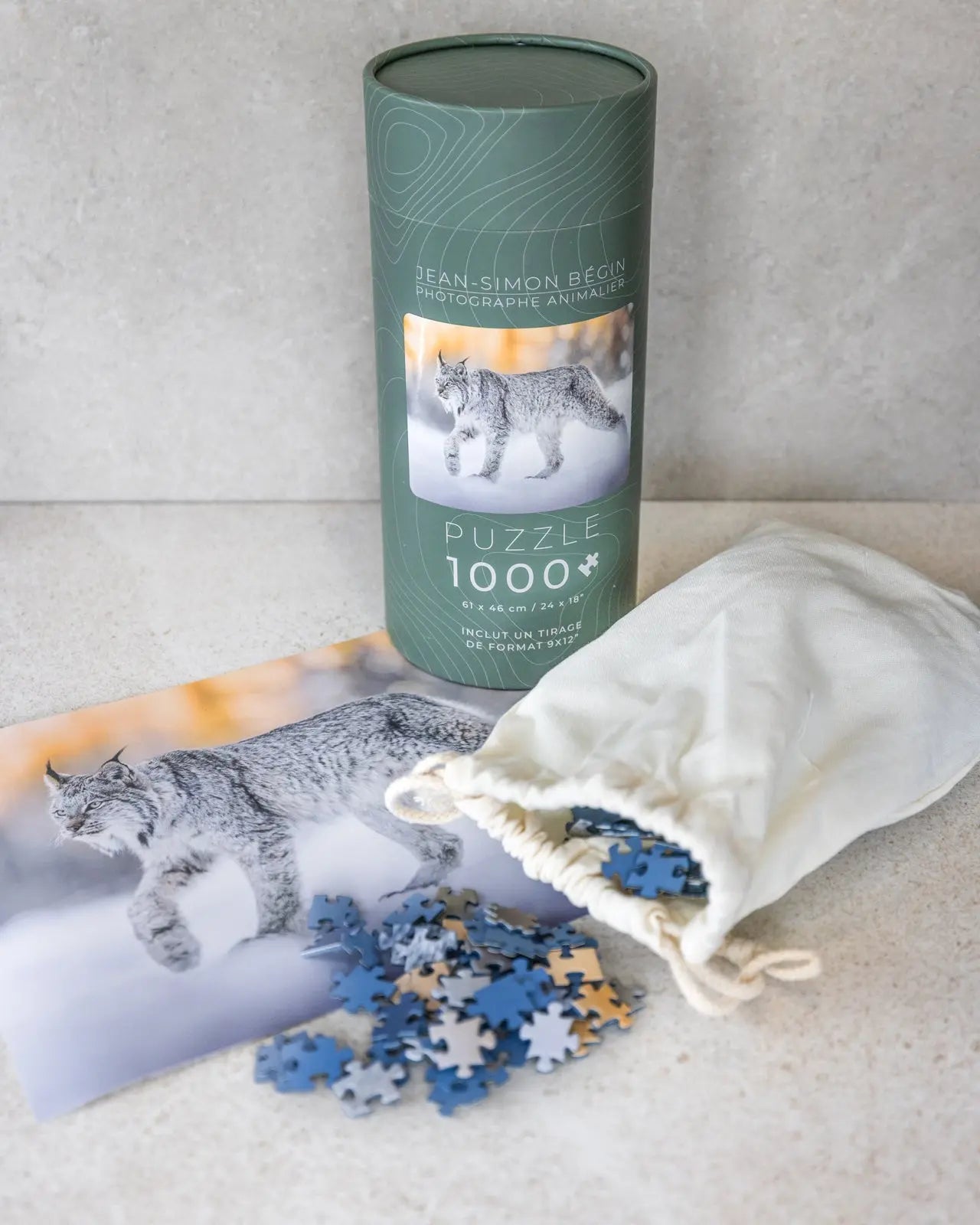
1000-piece jigsaw puzzles are experiencing an impressive resurgence in popularity. Whether it's to relax after a busy day, reduce stress, or simply enjoy a quiet moment away from screens, puzzles have become a must-do activity. But when it comes to choosing a 1000-piece puzzle, one quickly realizes that not all products are created equal. Print quality, cardboard sturdiness, cutting precision, or even the artistic value of the image... several elements can transform a simple activity into a truly immersive experience. In this article, I explain how to choose a good 1000-piece jigsaw puzzle and why some puzzles offer a significantly superior experience. Why are 1000-piece puzzles so popular? The 1000-piece format represents an ideal balance between challenge and enjoyment. It is complex enough to offer several hours of assembly, yet remains accessible to most puzzle enthusiasts. This format also allows for full appreciation of the final image, which becomes almost a work of art in itself once completed. The benefits are numerous: improved concentration stimulation of visual memory stress reduction perfect activity to do alone, as a couple, or with family It's also an activity that reconnects us with something simple: taking our time. Cardboard quality: an essential criterion When choosing a quality puzzle, the first thing to consider is the material used. Thin or fragile cardboard can quickly become frustrating. Pieces bend, delaminate, or wear out after a few uses. A good puzzle should offer: thick and rigid cardboard excellent resistance to handling rich color saturation High-end puzzles are often made with premium cardboard like Pretium Blueboard, recognized in the industry for its strength and the richness of colors it allows to achieve. Quality cardboard completely transforms the assembly experience. Cutting precision: what makes all the difference Another often overlooked factor is the quality of the piece cut. On lower quality puzzles, pieces can be: poorly cut too similar to each other difficult to assemble Precise cutting, on the other hand, allows for: smooth assembly pieces that fit perfectly a solid and satisfying final result When the pieces fit perfectly, assembly becomes much more enjoyable and the final image is crisp and stable. The importance of the image in a puzzle A puzzle is first and foremost a visual experience. An image that is too uniform or poorly printed can make assembly monotonous. Conversely, a photograph rich in textures, contrasts, and colors creates a much more immersive experience. Puzzles inspired by nature and wildlife are particularly appreciated for this reason. Variations in light, landscapes, and animals make assembly more dynamic. A strong image transforms a puzzle into a true moment of contemplation. The details that make a high-end puzzle Some puzzles go further by offering additional elements that enrich the experience. For example: a sturdy and elegant box a reusable bag for storing pieces a print of the original image These small details may seem secondary, but they completely change the perception of the product. We are no longer just talking about a puzzle, but about a durable and well-designed object. A puzzle that combines art and relaxation When the image comes from a photographic or artistic work, the puzzle takes on an extra dimension. Once completed, it almost becomes a decorative object. Many enthusiasts even choose to frame their puzzle once finished. This approach transforms the activity into something deeper: a moment of relaxation that also allows for the appreciation of a visual work. Why Jean-Simon Bégin's puzzles stand out The jigsaw puzzles created by Jean-Simon Bégin have been designed to offer a complete experience. Each model is designed around a powerful and immersive nature image, captured during many years spent traversing the wild territories of Quebec. Here's what sets these puzzles apart: Premium CardboardThe puzzles are made from Pretium Blueboard, a high-end cardboard known for its strength and color depth. High-Precision CutEach piece is perfectly adjusted to provide smooth and satisfying assembly. Reusable Cotton BagThe pieces come in a durable cotton bag, convenient for storage. Original Artwork PrintEach box contains a 9 × 12 inch paper print of the original image, allowing for full appreciation of the photograph. These details make all the difference between a simple puzzle and a product designed to last. Discover the "Loon" puzzle Among the most popular models, the Loon puzzle immerses the player in an emblematic natural scene of Quebec. The loon, a symbol of northern lakes, is captured in a calm and immersive atmosphere. The nuances of the water, the textures, and the composition make the assembly particularly enjoyable. You can discover all the specifications of the puzzle directly on the online store: 👉 https://jeansimonbegin.com/products/casse-tete-huard The puzzle: a timeless activity In a fast-paced world, puzzles remind us of the importance of slowing down. Assembling a 1000-piece jigsaw puzzle means taking the time to observe, reflect, and enjoy a simple moment. And when this puzzle is also a work inspired by nature, the experience becomes even richer. If you are looking for a puzzle that combines quality, art, and immersion, you can discover the entire collection directly on the store: 👉 https://jeansimonbegin.com/pages/boutique
Learn more
13 Wildlife Photography Tips to Improve in 2026
Do you want to capture the fascinating beauty of wildlife while respecting its environment? Wildlife photography is a demanding art, requiring as much passion as technical skill. In this article, you will discover 13 essential wildlife photography tips to improve your skills in 2026: from choosing the right equipment to indispensable ethics, as well as mastering light and shooting techniques. Get ready to refine your eye and enhance your images to reveal the richness of nature in all its splendor. What is wildlife photography? Wildlife photography consists of capturing images of animal species in their natural habitat. It differs from other photographic genres by its demand for observation and patience, aiming to capture the natural behavior of animals rather than simple portraits. Its main objective is to reveal the beauty of nature and the authentic behavior of wildlife in various environments. This discipline is accompanied by strong ethical considerations, particularly regarding the welfare of animals and the conservation of species. Wildlife photographers must therefore practice ethical and responsible photography, without disturbing the subjects observed. To answer the frequently asked question, wildlife photography is simply called "wildlife photo" or "fauna photography." It encompasses capturing images of wild animals with specific photographic equipment, often using DSLR or mirrorless cameras, and relies on a deep understanding of animal behavior and their environment. What path should you take to become a wildlife photographer? Becoming a wildlife photographer requires a combination of technical photography skills and knowledge in biology or natural sciences. It is recommended to pursue studies in photography to master the equipment, accompanied by training in biology, ecology, or nature conservation to understand animal behaviors and habitats. Field experience is essential. Knowledge of the natural environment, animal species, and their behaviors allows for anticipating scenes and obtaining authentic shots. Many wildlife photographers collaborate with conservation organizations or participate in conservation projects to enrich their expertise. In response to the question "What studies do you need to do to become a wildlife photographer?", it is advisable to combine photography training with a course in biology or environment, while gaining as much practical experience as possible in a natural setting, in order to develop patience and adaptability. Choosing the best equipment for wildlife photography Suitable cameras: DSLRs, mirrorless, and bridge cameras The choice of camera is fundamental for success in wildlife photography. Three main types exist: DSLRs, mirrorless cameras, and bridge cameras. DSLRs are appreciated for their robustness, speed, and the wide variety of available lenses. Mirrorless cameras are gaining popularity due to their compactness, powerful autofocus, and image quality often equivalent to DSLRs. Bridge cameras offer a more compact and economical solution with integrated zooms, but they generally perform less well in difficult conditions and for high-resolution photography. Here is a simplified comparison table: Camera Type Advantages Limitations DSLR Wide variety of lenses, robustness, fast autofocus Heavy, bulkier, costly Mirrorless Compact, powerful autofocus, advanced electronics Battery life sometimes reduced, more limited lens range Bridge Compact, powerful integrated zoom, affordable price Lower image quality, less suitable for professional work Depending on your budget and level, prioritize a camera capable of handling difficult lighting and offering manual modes for total control. Essential lenses and recommended focal lengths In wildlife photography, telephoto lenses of at least 300mm are essential for capturing wildlife from a distance without disturbing the animals. Their quality directly impacts optimal framing and image sharpness. It is often advisable to invest in a high-quality lens first before buying an expensive camera body, as the lens has a greater influence on the fidelity of the rendering. The management of focal lengths depends on the species to be photographed and the available distances. For aquatic birds or alpine lynx in protected habitats, for example, a 400mm or more is ideal. For smaller or closer species, a 200-300mm may suffice. Useful accessories: tripods, heads, and camouflage equipment A sturdy tripod is essential for stabilizing equipment during long sessions, especially with heavy telephoto lenses. Tripod heads allow for smooth and precise camera positioning, facilitating rapid movements to capture the element of surprise during natural wildlife behaviors. A guide to the best tripod heads will help you choose according to load and use. Camouflage equipment is also crucial. It helps to approach wildlife discreetly, limiting stress and disturbances. Nets, covers, or suitable clothing ensure effective concealment while respecting the welfare of the wildlife. Knowing your subject: understanding animal behavior and environment Studying and understanding the natural behaviors of animals is key to improving the quality of your shots. Knowing when and where to observe them, predicting their reactions and movements allows you to capture rare and authentic moments. Knowledge of the environment and protected habitats also contributes to the success of your photographic outings. Several tools and applications are available to identify local species, their habits, and their periods of activity. This refined knowledge is particularly useful for photographing rare or endangered species, whose observation requires increased respect for the environment and specific expertise. The link between a detailed understanding of species and the quality of photos is direct: the more attuned you are to animal behavior, the more impactful images you capture that tell a story respectful of nature. Essential shooting techniques in wildlife photography Mastering the exposure triangle—aperture, shutter speed, and ISO—is fundamental for capturing sharp and well-exposed images. Aperture controls depth of field, allowing you to isolate the animal from the background for an artistic blurred effect. Shutter speed must be fast enough to freeze motion, especially for birds in flight or fast mammals. Generally, a minimum speed of 1/1000 s is recommended to avoid motion blur. The ISO setting adjusts sensitivity based on available light, while ensuring digital noise is limited. Favor manual or semi-automatic modes to maintain full control over these parameters and adjust optimal framing according to the scene. The trick is to anticipate animal behavior to be ready to shoot at the right moment, while playing with depth of field to obtain dynamic and aesthetic photos. Light, an indispensable ally: prioritizing golden hours The soft light of the golden hours—just after dawn and before dusk—is ideal for wildlife photography. It brings warmth, subtle contrast, and intense colors, enhancing textures and creating a natural and pleasant ambiance. It is advisable to avoid the harsh midday light, which creates aggressive shadows and flattens details. Therefore, plan your outings according to animal activity phases and light quality to maximize your chances of remarkable captures. These moments also offer opportunities for original compositions with harmonious backgrounds, reinforcing the visual impact of your photos. Ethics and respect in wildlife photography Do not disturb the natural behavior of animals Respect for the natural behavior of animals is a fundamental principle. It is imperative not to influence, disturb, or stress the observed wildlife. The welfare of wildlife takes precedence over the quest for the perfect photo. The use of bait or lures is prohibited, as it can permanently alter the behavior and feeding habits of animals, with serious long-term consequences. Respecting protected area rules and species conservation Photographing in protected habitats involves strictly adhering to local regulations and safety distances. The wildlife photographer does not merely take pictures: they are also an active participant in species conservation and their environments. Photography then becomes a powerful tool for awareness and education, supporting conservation organizations and campaigning against threats such as lynx poaching or habitat destruction. By sharing your shots in live presentations, on social media, or with the general public, you contribute to the protection of rare and endangered species. Developing patience and perseverance in the field Patience is often the primary quality of a wildlife photographer. Success depends on the time dedicated to observing without haste, waiting for the right moment, sometimes for several hours, or even several days. Often, unexpected moments of wonder reveal rare behaviors, offering unique shots. Perseverance will help you get to know the terrain better, gain confidence, and anticipate scenes with greater accuracy. It is the repetition of outings and tenacity that builds expertise. Composition and framing: enhancing nature Good composition enhances wildlife photography. The rule of thirds is particularly useful for balancing elements in the frame by positioning the subject off-center. Care must also be taken with the background, avoiding distracting elements such as branches or overly vibrant colors. Seek an animal-level perspective to offer the viewer total immersion. Wide framing also provides greater flexibility in post-processing, allowing for cropping without losing quality. Post-processing: enhancing your photos ethically Image processing is a key step that allows you to refine the quality of a wildlife photo without betraying reality. Essential steps include adjusting exposure, contrast, saturation, and correcting flaws. It is advisable to avoid excessive retouching that alters the authenticity of the scene. Lightroom and Photoshop are indispensable software for precisely working with RAW files. Beginner mistakes can be excessive saturation or sharpness, resulting in an artificial look. To progress, there are numerous online resources and tutorials dedicated to responsible processing. Wildlife photography and social impact: raising awareness for conservation Wildlife photographs play a major role in raising awareness for species conservation. By immortalizing scenes, they enlighten the public about the challenges faced by wildlife, particularly in cases of poaching, such as that of the alpine lynx. Many conservation organizations and NGOs rely on these images to support their actions and mobilize activists in the field. As a photographer, you are an ambassador for nature, with the responsibility to convey an ethical and educational message. Presenting your photos in live presentations or on social media helps create a strong link between the public and the protection of habitats and animals. Practical tips for rapid progress in wildlife photography To progress effectively, here are some expert tips: first, focus on local species to master the environment and observe behaviors up close. Practice regularly, even without traveling far, to gain experience and patience. Don't be afraid to experiment with different settings and framing, and learn from your mistakes—they are an essential step in progress. Finally, exchange with other wildlife photographers to benefit from their tips, advice, and constructive criticism. This approach will allow you to quickly gain confidence and produce both technical and artistic photos, revealing the diversity of wildlife worldwide. Answering the question: what is the price of a wildlife photo? The price of a wildlife photo varies according to several factors: technical quality, rarity of the subject, and commercial or non-commercial use of the image. Amateur photos can be valued between a few tens and hundreds of dollars, while professional works, especially those featuring rare or ecologically critical species, can reach several thousand dollars. Monetization opportunities include selling art prints, royalties for publications, or specific commissions from organizations or specialized magazines. Valuing your photography requires adhering to strict ethics, protecting wildlife, and conveying a responsible image. Photographing wildlife with passion and responsibility Photographing wildlife is a subtle balance between technical mastery, patience, and respect for nature. By following these wildlife photography tips, you will develop a sustainable and ethical approach that values the beauty and well-being of the observed species. Continue your learning with curiosity and passion, contribute to the conservation of natural environments, and share your images to inspire other nature lovers to protect this precious heritage.
Learn more