
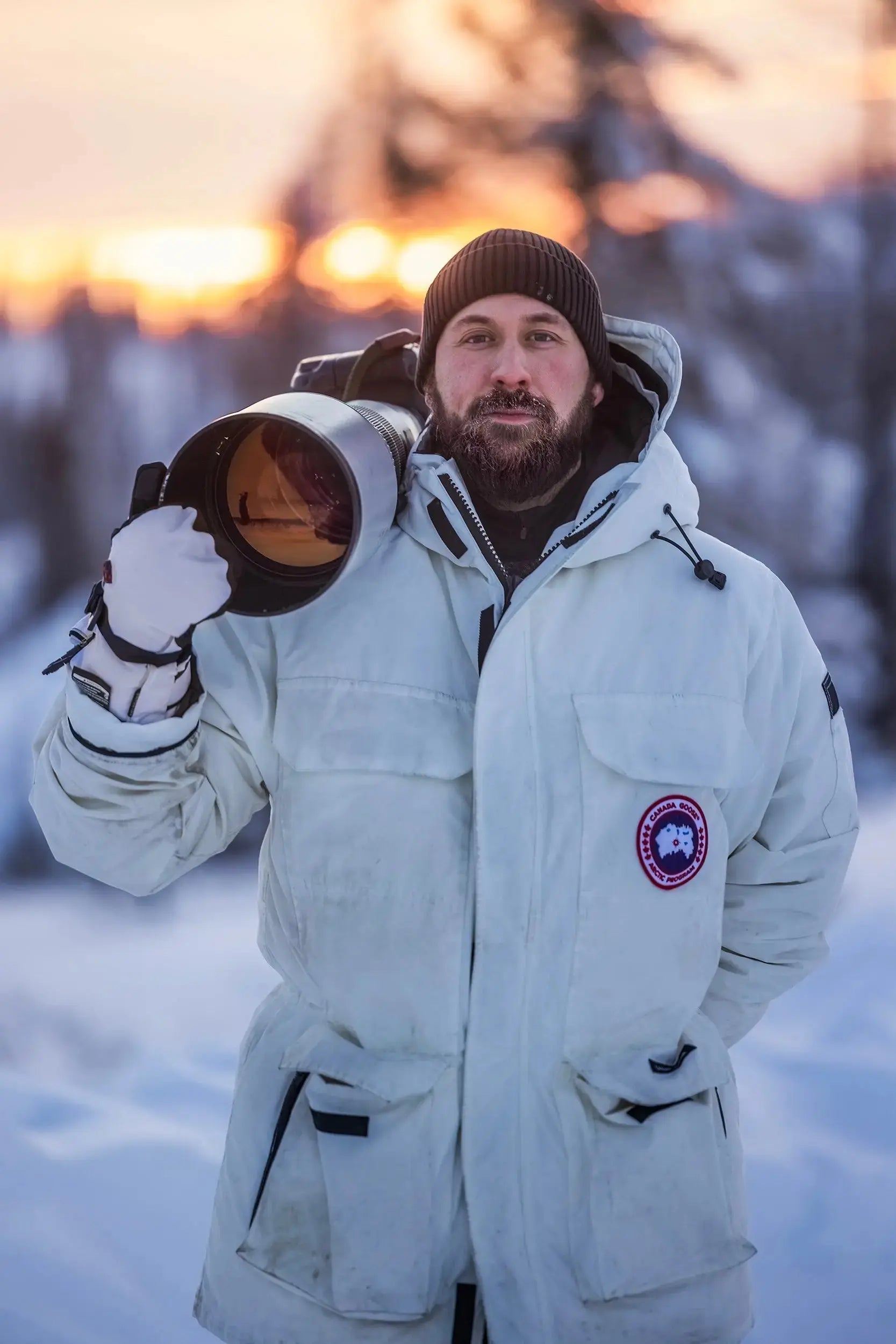
Do you want to capture the fascinating beauty of wildlife while respecting its environment? Wildlife photography is a demanding art, requiring as much passion as technical skill. In this article, you will discover 13 essential wildlife photography tips to improve your skills in 2026: from choosing the right equipment to indispensable ethics, as well as mastering light and shooting techniques. Get ready to refine your eye and enhance your images to reveal the richness of nature in all its splendor.
What is wildlife photography?
Wildlife photography consists of capturing images of animal species in their natural habitat. It differs from other photographic genres by its demand for observation and patience, aiming to capture the natural behavior of animals rather than simple portraits. Its main objective is to reveal the beauty of nature and the authentic behavior of wildlife in various environments.
This discipline is accompanied by strong ethical considerations, particularly regarding the welfare of animals and the conservation of species. Wildlife photographers must therefore practice ethical and responsible photography, without disturbing the subjects observed.
To answer the frequently asked question, wildlife photography is simply called "wildlife photo" or "fauna photography." It encompasses capturing images of wild animals with specific photographic equipment, often using DSLR or mirrorless cameras, and relies on a deep understanding of animal behavior and their environment.
What path should you take to become a wildlife photographer?
Becoming a wildlife photographer requires a combination of technical photography skills and knowledge in biology or natural sciences. It is recommended to pursue studies in photography to master the equipment, accompanied by training in biology, ecology, or nature conservation to understand animal behaviors and habitats.
Field experience is essential. Knowledge of the natural environment, animal species, and their behaviors allows for anticipating scenes and obtaining authentic shots. Many wildlife photographers collaborate with conservation organizations or participate in conservation projects to enrich their expertise.
In response to the question "What studies do you need to do to become a wildlife photographer?", it is advisable to combine photography training with a course in biology or environment, while gaining as much practical experience as possible in a natural setting, in order to develop patience and adaptability.
Choosing the best equipment for wildlife photography
Suitable cameras: DSLRs, mirrorless, and bridge cameras
The choice of camera is fundamental for success in wildlife photography. Three main types exist: DSLRs, mirrorless cameras, and bridge cameras. DSLRs are appreciated for their robustness, speed, and the wide variety of available lenses. Mirrorless cameras are gaining popularity due to their compactness, powerful autofocus, and image quality often equivalent to DSLRs.
Bridge cameras offer a more compact and economical solution with integrated zooms, but they generally perform less well in difficult conditions and for high-resolution photography.
Here is a simplified comparison table:
| Camera Type | Advantages | Limitations |
|---|---|---|
| DSLR | Wide variety of lenses, robustness, fast autofocus | Heavy, bulkier, costly |
| Mirrorless | Compact, powerful autofocus, advanced electronics | Battery life sometimes reduced, more limited lens range |
| Bridge | Compact, powerful integrated zoom, affordable price | Lower image quality, less suitable for professional work |
Depending on your budget and level, prioritize a camera capable of handling difficult lighting and offering manual modes for total control.
Essential lenses and recommended focal lengths
In wildlife photography, telephoto lenses of at least 300mm are essential for capturing wildlife from a distance without disturbing the animals. Their quality directly impacts optimal framing and image sharpness. It is often advisable to invest in a high-quality lens first before buying an expensive camera body, as the lens has a greater influence on the fidelity of the rendering.
The management of focal lengths depends on the species to be photographed and the available distances. For aquatic birds or alpine lynx in protected habitats, for example, a 400mm or more is ideal. For smaller or closer species, a 200-300mm may suffice.
Useful accessories: tripods, heads, and camouflage equipment
A sturdy tripod is essential for stabilizing equipment during long sessions, especially with heavy telephoto lenses. Tripod heads allow for smooth and precise camera positioning, facilitating rapid movements to capture the element of surprise during natural wildlife behaviors. A guide to the best tripod heads will help you choose according to load and use.
Camouflage equipment is also crucial. It helps to approach wildlife discreetly, limiting stress and disturbances. Nets, covers, or suitable clothing ensure effective concealment while respecting the welfare of the wildlife.
Knowing your subject: understanding animal behavior and environment
Studying and understanding the natural behaviors of animals is key to improving the quality of your shots. Knowing when and where to observe them, predicting their reactions and movements allows you to capture rare and authentic moments. Knowledge of the environment and protected habitats also contributes to the success of your photographic outings.
Several tools and applications are available to identify local species, their habits, and their periods of activity. This refined knowledge is particularly useful for photographing rare or endangered species, whose observation requires increased respect for the environment and specific expertise.
The link between a detailed understanding of species and the quality of photos is direct: the more attuned you are to animal behavior, the more impactful images you capture that tell a story respectful of nature.
Essential shooting techniques in wildlife photography
Mastering the exposure triangle—aperture, shutter speed, and ISO—is fundamental for capturing sharp and well-exposed images. Aperture controls depth of field, allowing you to isolate the animal from the background for an artistic blurred effect.
Shutter speed must be fast enough to freeze motion, especially for birds in flight or fast mammals. Generally, a minimum speed of 1/1000 s is recommended to avoid motion blur.
The ISO setting adjusts sensitivity based on available light, while ensuring digital noise is limited. Favor manual or semi-automatic modes to maintain full control over these parameters and adjust optimal framing according to the scene.
The trick is to anticipate animal behavior to be ready to shoot at the right moment, while playing with depth of field to obtain dynamic and aesthetic photos.
Light, an indispensable ally: prioritizing golden hours
The soft light of the golden hours—just after dawn and before dusk—is ideal for wildlife photography. It brings warmth, subtle contrast, and intense colors, enhancing textures and creating a natural and pleasant ambiance.
It is advisable to avoid the harsh midday light, which creates aggressive shadows and flattens details. Therefore, plan your outings according to animal activity phases and light quality to maximize your chances of remarkable captures.
These moments also offer opportunities for original compositions with harmonious backgrounds, reinforcing the visual impact of your photos.
Ethics and respect in wildlife photography
Do not disturb the natural behavior of animals
Respect for the natural behavior of animals is a fundamental principle. It is imperative not to influence, disturb, or stress the observed wildlife. The welfare of wildlife takes precedence over the quest for the perfect photo.
The use of bait or lures is prohibited, as it can permanently alter the behavior and feeding habits of animals, with serious long-term consequences.
Respecting protected area rules and species conservation
Photographing in protected habitats involves strictly adhering to local regulations and safety distances. The wildlife photographer does not merely take pictures: they are also an active participant in species conservation and their environments.
Photography then becomes a powerful tool for awareness and education, supporting conservation organizations and campaigning against threats such as lynx poaching or habitat destruction. By sharing your shots in live presentations, on social media, or with the general public, you contribute to the protection of rare and endangered species.
Developing patience and perseverance in the field
Patience is often the primary quality of a wildlife photographer. Success depends on the time dedicated to observing without haste, waiting for the right moment, sometimes for several hours, or even several days.
Often, unexpected moments of wonder reveal rare behaviors, offering unique shots. Perseverance will help you get to know the terrain better, gain confidence, and anticipate scenes with greater accuracy.
It is the repetition of outings and tenacity that builds expertise.
Composition and framing: enhancing nature
Good composition enhances wildlife photography. The rule of thirds is particularly useful for balancing elements in the frame by positioning the subject off-center.
Care must also be taken with the background, avoiding distracting elements such as branches or overly vibrant colors. Seek an animal-level perspective to offer the viewer total immersion.
Wide framing also provides greater flexibility in post-processing, allowing for cropping without losing quality.
Post-processing: enhancing your photos ethically
Image processing is a key step that allows you to refine the quality of a wildlife photo without betraying reality. Essential steps include adjusting exposure, contrast, saturation, and correcting flaws.
It is advisable to avoid excessive retouching that alters the authenticity of the scene. Lightroom and Photoshop are indispensable software for precisely working with RAW files.
Beginner mistakes can be excessive saturation or sharpness, resulting in an artificial look. To progress, there are numerous online resources and tutorials dedicated to responsible processing.
Wildlife photography and social impact: raising awareness for conservation
Wildlife photographs play a major role in raising awareness for species conservation. By immortalizing scenes, they enlighten the public about the challenges faced by wildlife, particularly in cases of poaching, such as that of the alpine lynx.
Many conservation organizations and NGOs rely on these images to support their actions and mobilize activists in the field. As a photographer, you are an ambassador for nature, with the responsibility to convey an ethical and educational message.
Presenting your photos in live presentations or on social media helps create a strong link between the public and the protection of habitats and animals.
Practical tips for rapid progress in wildlife photography
To progress effectively, here are some expert tips: first, focus on local species to master the environment and observe behaviors up close. Practice regularly, even without traveling far, to gain experience and patience.
Don't be afraid to experiment with different settings and framing, and learn from your mistakes—they are an essential step in progress. Finally, exchange with other wildlife photographers to benefit from their tips, advice, and constructive criticism.
This approach will allow you to quickly gain confidence and produce both technical and artistic photos, revealing the diversity of wildlife worldwide.
Answering the question: what is the price of a wildlife photo?
The price of a wildlife photo varies according to several factors: technical quality, rarity of the subject, and commercial or non-commercial use of the image. Amateur photos can be valued between a few tens and hundreds of dollars, while professional works, especially those featuring rare or ecologically critical species, can reach several thousand dollars.
Monetization opportunities include selling art prints, royalties for publications, or specific commissions from organizations or specialized magazines. Valuing your photography requires adhering to strict ethics, protecting wildlife, and conveying a responsible image.
Photographing wildlife with passion and responsibility
Photographing wildlife is a subtle balance between technical mastery, patience, and respect for nature. By following these wildlife photography tips, you will develop a sustainable and ethical approach that values the beauty and well-being of the observed species.
Continue your learning with curiosity and passion, contribute to the conservation of natural environments, and share your images to inspire other nature lovers to protect this precious heritage.